
SUMMARY
- OEM (Original Equipment Manufacturer) parts are made by or for your vehicle’s manufacturer to meet specific design and performance standards.
- OEM parts may cost more than some aftermarket alternatives because they are designed for your exact vehicle.
- Using OEM parts can help maintain proper fit, structural integrity, and compatibility with modern safety systems.
- Some manufacturers recommend or require OEM parts for certain collision repairs.
- Understanding the role of OEM parts can help you make informed decisions after an accident.
After a collision, one of the first questions many vehicle owners ask is why certain replacement parts cost more than others. If you’ve reviewed a repair estimate, you may have noticed that Original Equipment Manufacturer (OEM) parts are often priced higher than some aftermarket alternatives. While the difference in cost may seem significant, it’s important to understand what OEM parts are and why they are commonly recommended for many collision repairs.
Modern vehicles are engineered with precise tolerances, advanced materials, and integrated safety systems that depend on components fitting and performing as intended. Because of this, the replacement parts used during repairs can play an important role in restoring your vehicle’s safety, reliability, and appearance.
This guide explains why OEM parts often cost more, how they differ from other replacement options, and why they can be an important part of quality collision repair for drivers in Forney, TX.
What Are OEM Parts?
OEM stands for Original Equipment Manufacturer.
OEM parts are replacement components produced by or for the vehicle manufacturer and designed specifically for a particular make, model, and year.
Examples include:
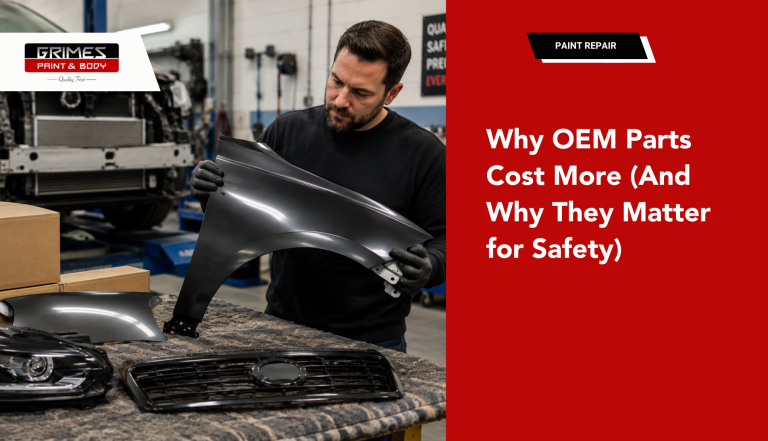
- Bumpers
- Fenders
- Hoods
- Headlights
- Grilles
- Structural components
- Moldings
Because these parts are manufactured to match the original vehicle specifications, they are designed to fit and function as intended by the manufacturer.
Professional collision repair includes evaluating which replacement parts are appropriate based on the vehicle, the damage, and manufacturer repair recommendations.
Learn more about vehicle safety from the National Highway Traffic Safety Administration (NHTSA).
Why OEM Parts Usually Cost More
Several factors contribute to the higher cost of OEM parts compared to some alternative replacement parts.
These factors may include:
- Manufacturer engineering and testing
- Vehicle-specific design
- Precise manufacturing standards
- Research and development costs
- Quality control processes
- Limited production for certain models
OEM parts are designed to meet the specifications established by the vehicle manufacturer, which can contribute to higher production costs than more broadly manufactured alternatives.
The I-CAR OEM Information Portal provides manufacturer repair information that supports the use of OEM repair procedures for modern vehicles.
Proper Fit Can Reduce Repair Challenges
One of the biggest advantages of OEM parts is that they are designed specifically for the vehicle being repaired.
A proper fit may help:
- Maintain body panel alignment
- Support proper installation
- Reduce adjustment time
- Help preserve factory appearance
- Improve compatibility with surrounding components
- Support manufacturer repair procedures
Accurate fitment can also contribute to a more efficient repair process by reducing the need for modifications during installation.
Professional auto body repair focuses on restoring proper panel fit, alignment, and overall vehicle appearance after a collision.
OEM Parts Help Support Vehicle Safety
Modern vehicles are carefully engineered so that structural components and safety systems work together during a collision.
OEM parts may help support:
- Crumple zones
- Airbag deployment systems
- Sensor positioning
- Structural integrity
- ADAS performance
- Occupant protection
Because these parts are designed for the specific vehicle, they help support manufacturer repair procedures intended to restore the vehicle after an accident.
The Insurance Institute for Highway Safety (IIHS) explains how modern vehicle structures and safety systems work together to improve occupant protection.
When Manufacturers Recommend OEM Parts
Not every repair requires the same replacement components. In some situations, manufacturers provide specific repair procedures that identify where OEM parts should be used.
Examples may include:
- Structural repairs
- Airbag system repairs
- Sensor mounting locations
- Aluminum body repairs
- Advanced safety systems
- High-strength steel components
Following manufacturer recommendations helps technicians perform repairs according to current repair information rather than relying on generalized repair methods.
Drivers can learn more about professional auto repair estimates and how replacement parts are identified during the inspection process.
Vehicle manufacturers continually update their repair procedures as new models are introduced and automotive technology evolves. These procedures are based on extensive engineering, crash testing, and real-world performance data to help ensure repaired vehicles perform as intended after a collision. For this reason, technicians consult the latest manufacturer repair information before replacing damaged components or deciding which parts should be used during the repair. Following current procedures helps avoid repairs that may have been acceptable on older vehicles but are no longer appropriate for today’s designs.
OEM parts are especially important when replacing components that interact with a vehicle’s structural or electronic safety systems. Even a small difference in the shape, material, or mounting location of a replacement part could affect how sensors operate or how surrounding components fit together.
Using the parts specified in manufacturer repair procedures helps maintain compatibility between replacement components and the vehicle’s original design, reducing the need for unnecessary modifications during installation.
In addition to using the correct replacement parts, manufacturers may also specify unique installation methods, specialized fasteners, adhesives, weld locations, or calibration procedures. Following these instructions helps ensure repairs meet the manufacturer’s standards instead of relying on assumptions or outdated techniques.
The I-CAR OEM Information Portal gives collision repair professionals access to manufacturer repair information and emphasizes the importance of following OEM procedures when restoring modern vehicles. By combining OEM parts with manufacturer-approved repair methods, technicians can perform repairs that support both vehicle safety and long-term reliability.
Should Cost Be the Only Factor?
While repair costs are always an important consideration, choosing replacement parts involves more than comparing prices.
Other factors include:
- Vehicle safety
- Repair quality
- Long-term durability
- Manufacturer recommendations
- Vehicle compatibility
- Insurance policy requirements
Discussing replacement part options with your repair facility and insurance company can help you better understand what is appropriate for your specific repair and why certain parts have been recommended.
The Society of Collision Repair Specialists (SCRS) provides educational resources about professional collision repair standards and repair planning.
Choosing a Repair Facility That Explains Your Options
A quality collision repair facility should take the time to explain the replacement parts included in your estimate and answer questions about why specific components have been recommended.
Look for a repair facility that provides:
- Detailed repair estimates
- Clear communication
- Manufacturer-focused repair procedures
- Transparent explanations of replacement parts
- Ongoing repair updates
- Quality control inspections
Drivers can also learn more about Grimes Paint & Body and the company’s commitment to quality repairs, honest communication, and customer-focused service.
The Federal Trade Commission (FTC) offers consumer guidance about making informed purchasing decisions.
A reputable repair facility should encourage customers to ask questions about their repair estimate rather than expecting them to approve repairs without understanding the details. Whether the estimate includes OEM parts, aftermarket parts, or additional repair procedures, technicians should be willing to explain why those recommendations were made and how they relate to the vehicle’s condition. Open discussions help customers feel more confident about the repair process and reduce confusion regarding costs, repair timelines, and insurance coverage.
Transparency is especially valuable when unexpected changes occur during repairs. If hidden collision damage is discovered after disassembly or manufacturer repair procedures require additional operations, the repair facility should clearly explain the updated repair plan and discuss how those changes may affect the estimate. Providing regular progress updates also helps customers know what stage of the repair their vehicle is in and when they can expect it to be completed.
Another sign of a quality collision repair facility is its commitment to educating customers instead of simply completing repairs. Explaining the importance of proper replacement parts, manufacturer repair procedures, and final quality inspections helps vehicle owners make informed decisions about their repairs.
The Society of Collision Repair Specialists (SCRS) promotes professional standards that emphasize communication, repair planning, and customer education throughout the collision repair process. By choosing a repair facility that values honesty, transparency, and clear communication, drivers can better understand their repair options and feel confident that their vehicle is being restored with safety and quality as the top priorities.
Frequently Asked Questions
What does OEM stand for?
OEM stands for Original Equipment Manufacturer, referring to parts made by or for the vehicle manufacturer for a specific vehicle.
Why do OEM parts usually cost more?
OEM parts are designed and manufactured to meet the vehicle manufacturer’s specifications, which often involves extensive engineering, testing, and quality control.
Are OEM parts always required?
Not always. The appropriate replacement parts depend on the vehicle, the type of repair, manufacturer recommendations, and insurance policy terms.
Do OEM parts fit better?
OEM parts are designed specifically for the vehicle they were manufactured for, helping support proper fit and compatibility.
Can OEM parts affect vehicle safety?
They can play an important role in restoring structural components and supporting the proper operation of safety systems when manufacturer procedures call for their use.
Will my insurance pay for OEM parts?
Coverage depends on your insurance policy, the vehicle, and the circumstances of the claim. Review your policy or speak with your insurance representative for details.
Why choose Grimes Paint & Body?
Grimes Paint & Body follows manufacturer repair procedures, provides transparent repair estimates, and helps customers understand their replacement part options so they can make informed repair decisions.
Need OEM Collision Repair Parts in Forney, TX? Trust Grimes Paint & Body
OEM parts often cost more because they are designed and manufactured to meet the exact specifications of your vehicle. While price is one factor to consider, proper fit, compatibility, manufacturer recommendations, and long-term safety are also important when choosing replacement parts after a collision. Understanding why OEM parts are recommended for certain repairs can help you make informed decisions and better understand your repair estimate.
If your vehicle has been involved in an accident, visit Grimes Paint & Body at 11804 N Profit Row, Forney, TX 75126, United States. Our experienced team is committed to performing high-quality collision repairs, explaining your repair options, and helping restore your vehicle safely and professionally.
