
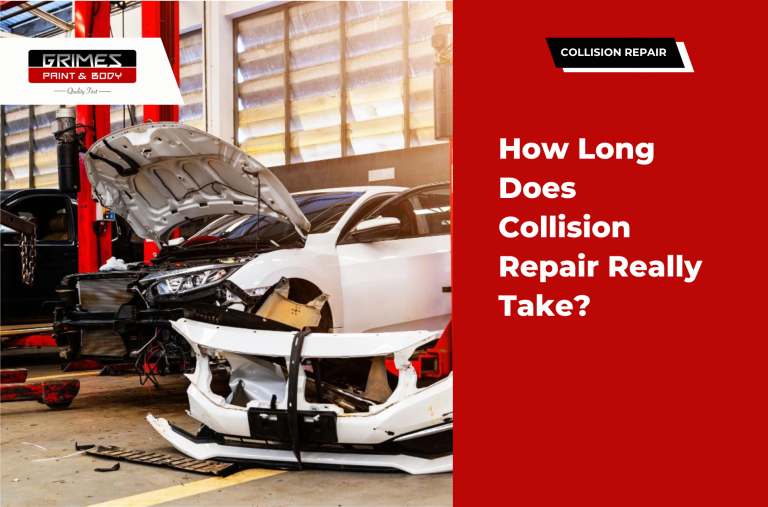
After a car accident, most drivers in Forney, TX ask two questions right away:
“Is my car safe?” and “How long will this take?”
Those questions are completely reasonable, especially when you rely on your vehicle for work, family responsibilities, or daily life. While everyone wants their car back as soon as possible, the reality is that collision repair timelines are never one-size-fits-all. Every accident is different, and modern vehicles are far more complex than they were even a decade ago.
In fact, a shop that promises a fast turnaround without first disassembling your vehicle should raise serious red flags. Hidden damage, safety system issues, and structural concerns are often impossible to identify during a quick visual inspection. Rushing the process can lead to missed damage, improper repairs, and long-term safety risks.
This guide breaks down how long collision repair really takes, what factors affect the timeline, and why doing the job correctly, according to OEM repair standards, often matters far more than simply getting your car back quickly.
What Is the Average Collision Repair Timeline?
Here’s a realistic overview of collision repair timelines for most vehicles:
- Minor damage (bumper, small dents): 3–7 business days
- Moderate collision damage: 1–3 weeks
- Major or structural damage: 3–6+ weeks
These ranges assume the repair follows manufacturer (OEM) repair procedures, includes proper scanning and calibration, and doesn’t skip safety steps. It’s also important to understand that timelines can shift if hidden damage is discovered, parts are backordered, or insurance approvals take longer than expected.
What Actually Determines How Long Collision Repair Takes?
1. Severity of Damage (Cost & Complexity)
The biggest factor affecting repair time is how much damage the vehicle sustained, including damage you can’t see beneath the surface.
- Cosmetic damage = faster repairs
- Structural or frame damage = longer, more detailed repairs
- Airbag deployment or ADAS involvement = additional safety steps
Modern vehicles are engineered with crumple zones, sensors, and tight tolerances, which means even low-speed collisions can create hidden issues. At Grimes Paint & Body in Forney, TX, vehicles are pre-scanned and partially disassembled before a final timeline is confirmed, because underlying damage is extremely common and must be addressed for safety.
Learn more about their collision repair in Forney, TX, and how advanced diagnostics ensure accurate and safe repairs.
2. Hidden Damage Found After Disassembly (Common Problem)
Insurance estimates are often written from photos or quick visual inspections, which means they only tell part of the story. Once a vehicle is disassembled, technicians frequently uncover issues such as:
- Bent brackets
- Damaged sensors
- Structural shifts
- Cracked or stressed mounting points
This discovery phase often extends the repair timeline, but it’s a critical step. Skipping proper disassembly can result in missed damage, improper part fitment, compromised safety systems, and repair failures that show up weeks or months later.
3. OEM Parts vs Aftermarket Parts (Problems & Tradeoffs)
Parts selection plays a major role in repair timelines.
OEM (Original Equipment Manufacturer) parts:
- Designed for your exact vehicle
- Proper fit and safety performance
- Required for many ADAS systems
Aftermarket parts:
- Often cheaper
- Frequently requires modification
- Can cause delays due to poor fit or reordering
While aftermarket parts are sometimes positioned as “faster,” poor fitment often causes rework and delays.
Grimes Paint & Body prioritizes OEM parts whenever possible, even when insurance companies push back, because safety matters more than speed.
4. Insurance Approval Delays (Comparison Factor)
Insurance companies don’t repair vehicles; body shops do, but insurance approvals can significantly impact repair timelines. Even when damage is clear, repairs often can’t move forward until certain items are reviewed and approved.
Common insurance-related delays include:
- Supplement approvals after teardown
- Pushback on OEM parts
- Disagreements over labor procedures
These delays usually occur after disassembly, when hidden damage is discovered, and the original estimate needs to be updated. Independent shops like Grimes Paint & Body work for the customer, not the insurance company, which means they take the time to advocate for proper repairs instead of cutting corners. While this approach can add time to the process, it helps ensure the vehicle is repaired safely, correctly, and according to manufacturer standards, rather than rushed to meet insurer cost targets.
Collision Repair Timeline: Step-by-Step Breakdown
Step 1: Initial Inspection, Pre-Wash & Pre-Scan (1 Day)
Before repairs begin, Grimes performs:
- Vehicle pre-wash
- Digital pre-repair scan
- Damage documentation
- Safety system checks
These scans establish a baseline and prevent missed issues later.
Vehicle safety reference:
NHTSA – Vehicle Safety Standards
https://www.nhtsa.gov/road-safety/vehicle-safety
Step 2: Disassembly & Repair Planning (2–5 Days)
This is one of the most important and time-consuming phases.
During this step:
- Panels and components are removed
- Hidden damage is identified
- OEM repair procedures are reviewed
- A complete repair plan is written
This is where many insurance estimates change, which can affect timelines.
Step 3: Insurance Supplements & Parts Ordering (3–10 Days)
Once the full scope of damage is known:
- Supplements are submitted
- OEM parts are ordered
- Backorders may affect timelines
Modern vehicles rely on extremely precise tolerances, especially with ADAS components.
Step 4: Structural & Frame Repairs (3–10 Days)
For vehicles with structural damage:
- Frame measurements are taken
- Structural corrections are made
- Repairs follow OEM tolerances
At Grimes, any vehicle with suspected structural damage is properly measured and corrected, not “pulled until it looks right.”
Step 5: Body Repair & Panel Fitment (3–7 Days)
This stage includes:
- Metal repairs
- Panel alignment
- Test fitting OEM components
Proper fitment here prevents wind noise, water leaks, and long-term corrosion.
Step 6: Paint & Refinishing (3–5 Days)
Quality paint work requires time:
- Surface preparation
- Primer and sealers
- Factory color matching
- Controlled curing
- Polishing and inspection
Rushing paint leads to peeling, mismatched color, or premature failure, issues that often show up months later.
Step 7: Reassembly, ADAS Calibration & Post-Scan (1–3 Days)
Modern vehicles require:
- ADAS recalibration
- Wheel alignment checks
- Post-repair scanning
- Final quality control inspection
Skipping this step can cause safety systems like lane departure warning or automatic braking to malfunction.
ADAS safety resource:
IIHS – Advanced Driver Assistance Systems
https://www.iihs.org/topics/advanced-driver-assistance
Industry repair standards:
I-CAR – Collision Repair Best Practices
Why Faster Collision Repair Isn’t Always Better (Best-of Insight)
The best collision repair timeline is the one that restores your vehicle’s safety, not the one that looks fastest on paper. Modern vehicles are complex, and proper repairs require time, precision, and multiple safety checks.
Rushed repairs often involve:
- Skipped scans
- Non-OEM parts
- Missed calibrations
- Incomplete inspections
When speed becomes the priority, important steps can be overlooked, increasing the risk of long-term problems such as warning lights, poor panel fit, malfunctioning safety systems, or reduced crash protection in a future accident. At Grimes Paint & Body, the focus is on doing it right the first time, even if that means your car stays in the shop a little longer. That extra time helps ensure your vehicle is returned to pre-accident condition and safe for you and your family.
What Forney Drivers Value Most in Collision Repair (Reviews & Trust)
Local drivers consistently say they want:
- Honest timelines
- Clear communication
- Safe, OEM-standard repairs
- No insurance-driven shortcuts
For many Forney families, trust matters just as much as technical skill. After an accident, drivers want to know their vehicle is being repaired correctly and that they won’t be left in the dark during the process. That’s why communication plays such a critical role in the overall repair experience. Grimes Paint & Body provides regular updates throughout the repair, answering questions, explaining next steps, and setting realistic expectations. This transparency helps reduce stress and builds confidence that the repair is being handled with care, integrity, and the customer’s safety in mind.
Frequently Asked Questions (FAQs)
Q: How long does collision repair take in Forney, TX?
A: Most collision repairs take anywhere from a few days to several weeks, depending on damage severity, parts availability, and insurance approvals.
Q: Why does collision repair take longer after disassembly?
A: Hidden damage is often discovered once panels are removed, requiring updated repair plans and insurance supplements.
Q: Do OEM parts make collision repair take longer?
A: Sometimes, but OEM parts reduce rework, fitment issues, and safety risks, often saving time overall.
Q: Can insurance companies delay repairs?
A: Yes. Insurance approvals and parts authorization can add days or weeks to the repair timeline.
Q: Is a longer repair time a bad sign?
A: Not necessarily. Longer timelines often indicate the shop is following proper OEM repair procedures instead of rushing unsafe shortcuts.
Q: Can collision repair be completed faster if I pay out of pocket instead of using insurance?
A: In some cases, paying out of pocket can reduce delays caused by insurance approvals or supplements. However, repair time is still dependent on damage severity, parts availability, and required OEM safety procedures.
Q: How can I avoid unnecessary delays during the collision repair process?
A: Choosing a shop that performs thorough disassembly, follows OEM repair procedures, and communicates proactively with both you and the insurance company helps prevent rework and timeline setbacks.
Get Honest Timelines & Safe Repairs
If you’ve been in an accident and want clear expectations, OEM-standard repairs, and a shop that works for you, not the insurance company, trust Grimes Paint & Body.📍 Grimes Paint & Body, Forney, TX
📞 Call (469) 728-7210
📝Request a Free Estimate