
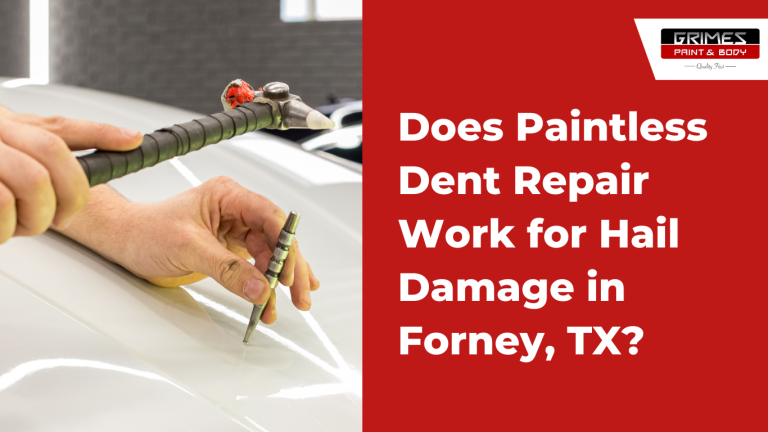
After a hailstorm rolls through Forney, TX, it’s common for drivers to step outside and immediately notice dozens—or even hundreds—of small dents scattered across their vehicle. Roof panels, hoods, trunks, and even door skins often take the brunt of the damage. In the days following the storm, one term tends to dominate conversations, ads, and insurance discussions: PDR, or paintless dent repair.
Friends recommend it. Online ads promise lightning-fast repairs. Insurance representatives may suggest it as the quickest path forward. But once the initial shock wears off, most vehicle owners find themselves asking a more important question—one that goes beyond speed or convenience:
Does paintless dent repair actually work for hail damage, or is it just a cosmetic shortcut that could create problems later?
The honest answer isn’t a simple yes or no.
Paintless dent repair can be an excellent solution for hail damage when the conditions are right. When the damage doesn’t meet those conditions, however, forcing PDR can result in distorted panels, compromised paint protection, and repairs that don’t truly restore the vehicle to pre-storm condition.
That’s why understanding when PDR works—and when it doesn’t—is critical, especially if you care about long-term value, safety, and proper repairs.
In this expert guide for Forney-area drivers, we’ll cover how PDR works, what affects cost, the drawbacks to watch for, fair comparisons to traditional repair, and the best approach for common hail scenarios around Forney and the DFW area.
Quick Answer: Does PDR Work for Hail Damage?
Yes—paintless dent repair works very well for hail damage when the paint is intact and the dents are shallow to moderate. In these cases, PDR can restore the metal without repainting, which helps preserve the factory finish.
However, if the paint is cracked, the metal is sharply creased, or the panel is overstretched, traditional auto body repair—or a combination approach—is often the safer and more durable option.

How Paintless Dent Repair Works (And Why That Matters)
Paintless dent repair is a specialized process that reshapes damaged metal from behind the panel using precision tools and controlled pressure. Unlike conventional repairs, PDR typically avoids sanding, filler, and repainting.
When the damage qualifies, PDR can offer major advantages:
- It preserves factory paint (which is usually more durable than aftermarket refinish work).
- It avoids paint matching issues, especially on metallic or pearl finishes.
- It can reduce the number of steps required to restore the panel.
- It helps maintain resale value by keeping original finishes intact.
This is why many hail-damaged vehicles qualify for Paintless Dent Repair in Forney, TX
But here’s the catch: PDR depends on the metal being able to return to its original shape without stressing the panel beyond its limits—and without fracturing the paint. If the damage pushes beyond those limits, that’s when repair quality can drop.
Why Hail Damage Varies So Much in Forney, TX
Not all hailstorms hit the same way. In North Texas, you might see a storm that produces light “peppering” across panels, or you might get larger hailstones that strike hard enough to create deeper dents, sharp creases, and paint fractures.
Severity and repair approach depend on:
- Hail size and speed
- Angle of impact
- Where the vehicle was parked (open lot vs. covered area)
- Panel shape and body lines
- Material type (steel vs. aluminum)
It’s also common for a single vehicle to have a mix of damage types—meaning some panels are perfect for PDR, while others may require refinishing or part replacement.
What to Do Right After a Hailstorm (Before You Choose a Repair)
Before you commit to any repair method (or even schedule repairs), a few smart steps can protect your claim and your results:
- Document the damage immediately
Take photos of the roof, hood, trunk, and both sides of the vehicle. Include close-ups and wider shots in good lighting. - Check glass and weather seals
Windshield chips, cracked rear glass, and damaged moldings can allow leaks. If you notice leaks or wind noise later, you’ll want documentation that it started with hail damage. - Don’t assume “it’s just cosmetic”
Hail can damage trim, emblems, and areas around sensors/cameras. Some vehicles also have tech mounted behind windshields or in bumpers that should be inspected after impact. - Get a professional inspection before you approve the repair method
This is where you find out whether your vehicle is a strong candidate for PDR—or whether you’ll get better long-term results from traditional repair or a hybrid plan.
Cost: What Affects PDR Cost for Hail Damage in Forney, TX?
PDR pricing is not one-size-fits-all. It’s based on repair complexity, not just dent count.
1) Dent Quantity and Density
A few dents on one panel is very different than a roof covered in impacts. High-density hail damage takes more time, more precision, and more panel access work.
2) Location and Access
Roof dents, dents near braces, or dents close to edges can require interior disassembly for proper access—raising labor time.
3) Paint Condition
PDR is designed to preserve paint. If the clear coat is cracked, refinishing may be needed to restore protection and prevent long-term failure.
4) Panel Material and Design
Aluminum panels behave differently than steel. Body lines (sharp creases running down doors and fenders) also raise difficulty.
5) Additional Repairs (Glass, Trim, Sensors)
Hail can damage moldings, emblems, glass, and sensor areas. These items matter because a “dent-only” estimate can miss the real cost drivers.
If you’re considering PDR, start with a professional evaluation via Paintless Dent Repair in Forney, TX
Problems and Negatives: When PDR Can Disappoint
PDR is a great tool—but it has limits. Here’s where problems typically show up:
1) Cracked Paint and Clear Coat
PDR won’t restore paint protection. If the clear coat is compromised, corrosion risk can increase over time, especially in areas that trap moisture.
2) Overstretched Metal
Severe impacts can stretch the panel. PDR may improve the look, but not fully restore factory shape or reflections.
3) Sharp Creases and Body Line Damage
These areas are harder to correct perfectly. Sometimes a combination approach is the only way to restore both shape and finish.
4) “Fast and Cheap” Hail Repairs
Speed-only repairs can leave waves or distorted reflections—often visible in sunlight, parking lot lights, or after the vehicle is washed.
The safest approach is to match the repair method to the actual damage—not the quickest sales pitch.
Comparisons: PDR vs. Traditional Auto Body Repair
Paintless Dent Repair (PDR)
Best for: intact paint + shallow/moderate dents
Strengths: preserves factory paint and can be faster
Limitations: not ideal with cracked paint or severe deformation
Traditional Auto Body Repair
Best for: cracked paint, deep dents, sharp creases, and edge damage
Strengths: restores both shape and paint protection
Limitations: more labor and refinishing steps
For repairs beyond dents, professional collision repair services in Forney, TX
Best-Of: Best Repair Choice by Hail Damage Type
Best for “small dings everywhere” (paint intact)
✅ PDR
Best for roof dents with tight access
✅ PDR if accessible; otherwise combination approach
Best for cracked paint on hood/roof
✅ Traditional repair + refinishing
Best if hail damaged glass or sensor areas
✅ Thorough inspection, correct reassembly, and verification steps
Why an In-Person Hail Damage Inspection Matters (More Than Photos)
Photos are helpful, but they don’t always show:
- Subtle metal stretch
- Micro-cracks in clear coat
- Distortion along body lines
- Hidden impacts near braces and reinforcement
A proper inspection allows a shop to determine whether PDR is likely to restore:
- Panel shape
- Light reflection consistency
- Paint integrity
- Long-term durability
It also helps identify “secondary” hail damage that affects the real repair plan—like damaged moldings, clips, and glass.
Insurance Claims: What Most Drivers Don’t Realize
After a big storm, insurance claims volume spikes. That means many carriers default toward the fastest repair category (often PDR) when possible. But here’s the key: an insurance estimate is a starting point, not the final truth.
A quality repair plan should be based on:
- What the vehicle needs to be properly restored
- Whether paint protection is compromised
- Whether panels are stretched or creased
- Whether safety-related components need inspection
You’re allowed to ask questions, request clarification, and choose a repair plan that actually makes sense for your vehicle.
Reviews and Trusted Sources: Why Repair Quality Matters
These organizations help reinforce why proper procedures and safety checks matter:
- National Highway Traffic Safety Administration (NHTSA)
- Insurance Institute for Highway Safety (IIHS)
- I-CAR collision repair training standards
- ASE-certified automotive repair standards
FAQs (Schema-Friendly)
Q: Does paintless dent repair work for hail damage in Forney, TX?
A: Yes—PDR works well when the paint is intact and dents are shallow to moderate. If paint is cracked or metal is creased, traditional repair may be required.
Q: How much does PDR for hail damage cost in Forney, TX?
A: Cost depends on dent count, panel access, paint condition, and vehicle material. A professional inspection is the best way to get an accurate range.
Q: Can PDR fix hail damage on aluminum panels?
A: Sometimes, but aluminum can behave differently than steel. The repair plan should follow appropriate procedures and realistic expectations.
Q: Will PDR preserve my factory paint?
A: Yes. One of the biggest advantages of PDR is that it keeps your factory finish intact.
Q: Do I need to file an insurance claim for hail damage repair?
A: Many drivers do when repair costs exceed the deductible. A shop can help document damage so you understand your options.
Your Next Step with Grimes Paint & Body
If you’re deciding between PDR and traditional repair after a storm, get an honest inspection from a local shop that puts safety first.
Call Grimes Paint & Body at (469) 728-7210 or schedule your evaluation through Paintless Dent Repair in Forney, TX
