
TLDR Summary
- Paintless Dent Repair (PDR) is faster and more affordable for minor hail damage
- Traditional dent repair is required for deeper dents or paint damage
- PDR preserves your factory paint and value
- Severe hail damage often requires a combination of both methods
- The best option depends on damage severity, not just cost
If your car was hit by hail in Forney, TX, the right repair method depends on how serious the damage is and whether your paint was affected.
After a hailstorm hits Forney, most drivers walk outside and see the same thing. Dents across the hood, roof, and panels that weren’t there the day before.
The next question is usually: What’s the best way to fix this?
You’ll likely hear two options.
Paintless Dent Repair (PDR) or traditional dent repair
The challenge is that most people don’t know the difference, and choosing the wrong method can lead to unnecessary costs or poor results.
In this guide, we’ll break down exactly how each repair method works, what they cost, the pros and cons, and how to decide what’s best for your vehicle after hail damage in Forney, TX.
What Is Paintless Dent Repair (PDR)?
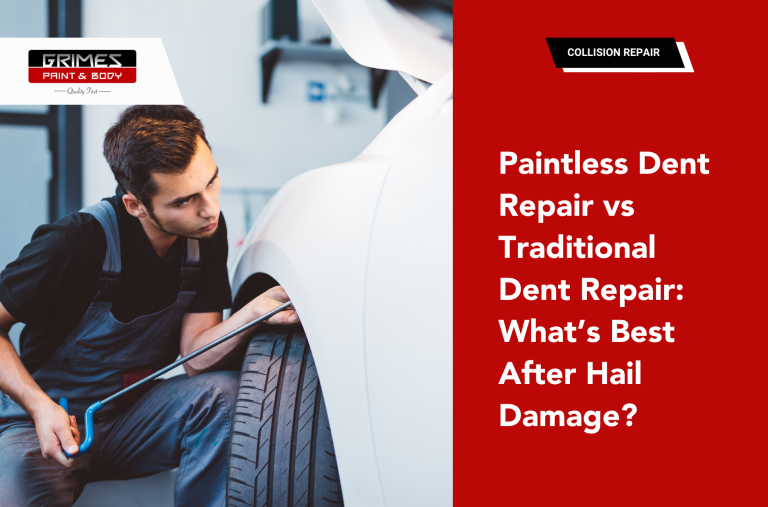
Paintless Dent Repair is a method used to remove dents without repainting or replacing panels.
Technicians use specialized tools to gently massage the metal back into its original shape from behind the panel.
PDR works best when:
- The paint surface is not damaged
- The dent is shallow
- The metal is not stretched
Because it preserves the original paint, PDR helps maintain your vehicle’s value and factory finish.
If your damage qualifies, you can explore paintless dent repair as a fast and effective solution.
What Is Traditional Dent Repair?
Traditional dent repair is the more involved process most people think of when they hear “body shop repair.”
This method includes:
- Sanding and filling damaged areas
- Repainting the panel
- Replacing parts if necessary
Traditional repair is required when:
- The paint is cracked or chipped
- The dent is deep or sharp
- The panel is severely damaged
While it takes longer, it allows technicians to fully restore areas that PDR cannot fix.
Cost: Which Option Is More Affordable?
Short answer: PDR is usually more affordable, but only when it’s the right fit for the damage.
Paintless Dent Repair Costs
- Typically lower cost
- Less labor and no repainting
- Faster turnaround
Traditional Dent Repair Costs
- Higher due to labor and materials
- Includes paint, blending, and refinishing
- May involve part replacement
According to industry repair data and insurers, hail damage claims often favor PDR when possible because it reduces repair time and cost.
However, choosing PDR just because it’s cheaper is not always the right decision. The repair method should match the damage, not the budget.
Problems and Limitations of Each Method
Limitations of Paintless Dent Repair
- Cannot fix paint damage
- Not effective on sharp or deep dents
- May not work on edges or reinforced areas
Limitations of Traditional Dent Repair
- Longer repair time
- Higher cost
- Requires repainting, which can affect the factory finish
The key takeaway is this: each method has a purpose, and using the wrong one can lead to poor results.
PDR vs Traditional Dent Repair: Side-by-Side Comparison
Choose Paintless Dent Repair when:
- Dents are small to moderate
- Paint is intact
- Damage is from hail or minor impacts
- You want faster and more cost-effective repair
Choose Traditional Dent Repair when:
- Paint is damaged or cracked
- Dents are deep or stretched
- Structural or panel damage exists
- Full restoration is required
In many hail damage cases, vehicles actually need a combination of both methods.
What’s Best After Hail Damage in Forney, TX?
Direct answer: Most hail damage repairs in Forney start with PDR, but severe cases require traditional repair or a combination of both.
North Texas is known for strong spring storms and hail, which means damage can vary widely from vehicle to vehicle.
The National Weather Service tracks frequent hail events across Texas, making this one of the most common causes of vehicle damage in the region.
Because of that, it’s important to have a professional inspection rather than guessing based on what you see.
What many drivers don’t realize is that hail damage can look minor on the surface but still require more involved repairs. Small dents across multiple panels may qualify for PDR, but if even a few areas have paint damage or deeper impact points, those sections may need traditional repair. That’s why a proper evaluation looks at the entire vehicle, not just the most visible damage.
Another factor is how modern vehicles are built. Today’s materials, panel designs, and paint systems can react differently to hail than older vehicles, which makes choosing the right repair method even more important. A trained technician will assess dent depth, panel location, and paint condition before recommending a solution.
In many cases, the best outcome comes from combining both methods, using PDR where possible and traditional repair where necessary. This approach helps maintain your vehicle’s original finish while still addressing more serious damage correctly.
The Repair Process After Hail Damage
Here’s what a proper repair process looks like:
Step 1: Inspection
Technicians assess dent size, depth, and paint condition.
Step 2: Repair Method Selection
They determine whether PDR, traditional repair, or both are needed.
Step 3: Repair Work
- PDR removes eligible dents
- Traditional repair addresses deeper or damaged areas
Step 4: Final Quality Check
The vehicle is inspected to ensure all damage is properly repaired.
If your vehicle has more extensive damage beyond dents, Grimes also provides collision repair in Forney, TX, to restore structural and cosmetic issues.
Reviews and What Customers Should Look For
Not all dent repair is the same.
Before choosing a shop, ask:
- Do they offer both PDR and traditional repair?
- Do they explain which method is best and why?
- Do they prioritize preserving your vehicle’s value?
A shop that only offers one method may try to force every repair into that solution.
At Grimes Paint & Body, the focus is on choosing the right repair for the damage, not the easiest or fastest option.
Beyond those initial questions, it’s also important to look at how a shop communicates with its customers. Do they take the time to explain the repair process in a way that’s easy to understand? Are they transparent about timelines, potential delays, and what to expect throughout the repair? Clear communication is often a strong indicator of a shop that values trust and long-term relationships.
You should also pay attention to how a shop approaches inspections. A thorough evaluation of hail damage should include more than just a glance. Proper lighting, detailed mapping of dents, and an honest assessment of whether PDR or traditional repair is appropriate all play a role in getting the repair right.
Customer reviews can also provide insight, but focus on patterns rather than just star ratings. Look for feedback about the quality of work, communication, and whether the repair held up over time. Consistency in these areas usually reflects a shop that prioritizes doing the job correctly, not just quickly.
FAQs
Q: What is paintless dent repair?
A: Paintless Dent Repair is a method that removes dents without repainting by reshaping the metal from behind the panel.
Q: Is PDR better than traditional dent repair?
A: It depends on the damage. PDR is better for minor dents with no paint damage, while traditional repair is needed for more severe damage.
Q: How much does hail damage repair cost in Forney, TX?
A: Costs vary based on the number of dents, severity, and repair method. PDR is typically more affordable than traditional repair.
Q: Will insurance cover hail damage repair?
A: Most comprehensive insurance policies cover hail damage, but coverage depends on your specific policy.
Q: How long does PDR take?
A: Many PDR repairs can be completed in a few days, depending on damage severity.
Q: Can all hail damage be fixed with PDR?
A: No. Deep dents or damage with paint issues require traditional repair.
Q: Will my paint match after repairs?
A: Yes. Professional refinishing ensures proper color matching when repainting is needed.
Q: Does hail damage affect resale value?
A: Yes, but proper repair, especially with PDR, can help preserve value.
Get the Right Repair for Your Hail Damage
If your vehicle was hit by hail, the most important step is getting an accurate inspection and choosing the right repair method.
Request a free estimate today or call the shop to speak with a team that will walk you through your options.
Grimes Paint & Body is located at 11804 N Profit Row, Forney, TX 75126, serving drivers across Forney, Kaufman County, and the DFW area with honest recommendations, OEM-standard repairs, and a customer-first approach.
When you bring your vehicle in, you’re not just getting a quick estimate. You’re getting a clear explanation of the damage, what repair methods are available, and which option makes the most sense for your specific situation. Whether it’s paintless dent repair for minor hail damage or more involved body work, the goal is always to protect your vehicle’s safety, value, and long-term performance.
The team understands how stressful storm damage can be, especially when dealing with insurance and unexpected repairs. That’s why they take the time to answer your questions, communicate clearly, and guide you through the entire process from start to finish.
Whether your vehicle qualifies for PDR or needs more extensive repair, you’ll get clear answers and the right solution for your situation.
