
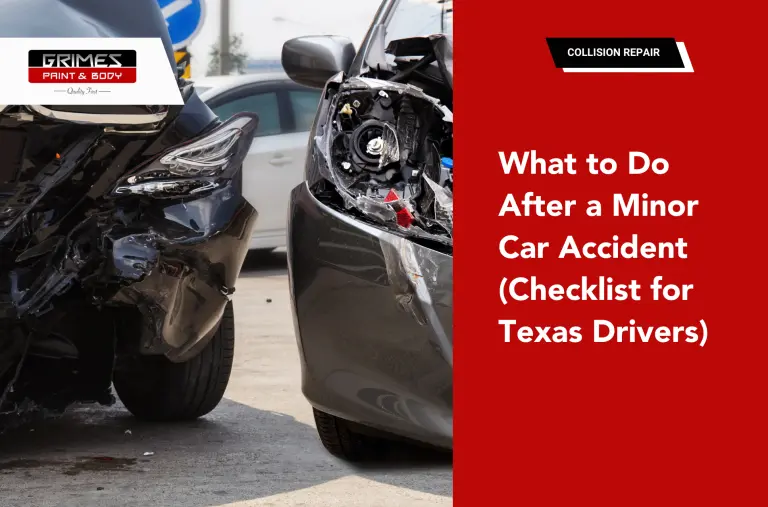
TL;DR: What to Do After a Minor Car Accident in Texas
• Stay calm and check yourself and others for injuries immediately after the accident.
• Move vehicles to a safe location if possible to prevent additional collisions.
• Call law enforcement if there are injuries, major damage, or safety concerns.
• Exchange insurance and contact information with the other driver.
• Take photos and document the accident scene, damage, and surrounding area.
• Notify your insurance company and report the incident as soon as possible.
• Have your vehicle inspected for hidden damage even after a minor crash.
• A professional collision inspection helps ensure your vehicle remains safe to drive.
Even a minor car accident can be stressful and confusing. Many drivers are unsure what steps to take immediately after a collision, especially if the damage appears small or there are no visible injuries.
However, the actions you take right after an accident can affect your safety, insurance claim, and vehicle repairs. Knowing what to do can help protect you legally, ensure everyone involved stays safe, and prevent additional problems later.
This guide provides a simple checklist for Texas drivers that explains what to do after a minor car accident, how to document the situation properly, and when to have your vehicle inspected for potential hidden damage.
Step 1: Check for Injuries and Stay Calm
The first and most important step after any accident is to check for injuries.
Take a moment to assess yourself, your passengers, and anyone else involved in the collision. If someone appears injured, call emergency services immediately.
Even if injuries seem minor, they should not be ignored. The National Highway Traffic Safety Administration notes that many crash-related injuries may not be immediately obvious after a collision.
Remaining calm helps you think clearly and make better decisions in the moments following the accident.
Step 2: Move to a Safe Location
If the vehicles involved are still drivable and it is safe to do so, move them to the side of the road or a nearby parking area.
Leaving vehicles in the roadway can increase the risk of another accident. Turning on hazard lights can help alert other drivers to the situation.
If the vehicle cannot be moved safely, stay inside with your seatbelt fastened until help arrives.
Step 3: Call the Police if Necessary
Texas law does not always require police involvement in minor accidents, but there are situations where contacting law enforcement is important.
You should call the police if:
• Someone is injured
• There is significant property damage
• The other driver appears impaired
• The accident is blocking traffic
• The other driver refuses to share information
Having an official police report can also be helpful when filing an insurance claim or resolving disputes about what happened during the accident.
Step 4: Exchange Information with the Other Driver
After ensuring everyone is safe, exchange information with the other driver.
Important information to collect includes:
• Full name and contact information
• Driver’s license number
• License plate number
• Insurance company and policy number
• Vehicle make and model
It is also helpful to note the exact location of the accident and the time it occurred.
Avoid discussing fault at the scene. Simply focus on collecting the necessary information.
Step 5: Document the Accident Scene
Accurate documentation can make a major difference when dealing with insurance claims.
Use your phone to take clear photos of:
• Vehicle damage from multiple angles
• License plates
• Road conditions
• Traffic signs or signals
• The surrounding area
Photographs provide visual evidence that can help explain what happened during the accident.
Step 6: Notify Your Insurance Company
Most insurance companies require accidents to be reported within a reasonable timeframe.
Contact your insurance provider as soon as possible to report the incident and provide the information you collected.
Your insurance representative may ask for photos, a description of the accident, and the other driver’s insurance information.
Prompt reporting can help prevent delays in the claims process.
Step 7: Watch for Hidden Vehicle Damage
Even minor accidents can cause hidden damage that is not visible immediately.
Modern vehicles are built with energy-absorbing components designed to protect passengers during a collision. While these components improve safety, they can also hide damage behind body panels or bumpers.
For example, internal bumper structures, mounting brackets, and safety sensors may be affected even if the outer bumper appears fine.
Organizations such as I-CAR provide training for collision repair technicians on how modern vehicles should be inspected and repaired following an accident.
Step 8: Schedule a Professional Vehicle Inspection
After any collision, it is a good idea to have your vehicle inspected by a qualified repair professional.
A trained technician can check for:
• Hidden structural damage
• Sensor alignment issues
• Suspension damage
• Frame misalignment
• Paint and body damage
Drivers who need repairs after an accident can learn more about professional collision repair services and how technicians restore vehicles after crash damage.
Getting a professional inspection ensures the vehicle remains safe and helps prevent small issues from turning into larger problems later.
Understanding Modern Vehicle Safety Systems
Many vehicles on the road today are equipped with advanced driver assistance systems.
These technologies may include:
• Automatic emergency braking
• Blind spot monitoring
• Lane departure warning
• Parking sensors
• Adaptive cruise control
According to the Insurance Institute for Highway Safety, these safety technologies play an important role in reducing accidents and improving driver safety.
However, these systems often rely on sensors, cameras, and radar components that can be affected during even minor collisions.
Because of this, proper inspection and calibration may be necessary after certain types of damage.
Why Even Minor Accidents Should Be Taken Seriously
Some drivers may choose to ignore minor damage after a small collision, especially if the vehicle still drives normally.
However, delaying repairs or inspections can lead to additional issues over time.
Potential problems include:
• Hidden structural damage
• Misaligned sensors
• Loose bumper components
• Paint damage that leads to corrosion
Addressing damage early can prevent more expensive repairs later and help maintain the vehicle’s safety and value.
If you are unsure about the condition of your vehicle after a collision, you can request a repair estimate to have a professional evaluate the damage.
Get a Professional Collision Inspection After an Accident
Even small accidents can create hidden problems that are difficult to see without a proper inspection.
Having your vehicle evaluated by trained technicians helps ensure that damage is identified and repaired correctly.
Professional collision repair specialists can inspect structural components, body panels, and safety systems to confirm that your vehicle is safe to drive and restored properly.
During a professional inspection, technicians often perform a detailed visual evaluation and may remove certain panels or bumper covers to check for hidden damage underneath. Modern vehicles contain complex components such as impact absorbers, mounting brackets, and electronic safety systems that can be affected even in low-speed collisions.
In some cases, technicians may also run diagnostic scans to check for sensor issues or warning codes related to advanced driver assistance systems. These systems include features like parking sensors, blind spot monitoring, and collision avoidance technology, which may need recalibration after an accident.
Addressing damage early helps prevent small problems from turning into larger repairs later. A professional inspection also provides peace of mind, ensuring your vehicle is structurally sound and safe before returning to everyday driving.
FAQs
Q: What should I do immediately after a minor car accident in Texas?
A: Check for injuries, move vehicles to a safe location if possible, exchange information with the other driver, document the scene, and notify your insurance company.
Q: Do I need to call the police after a minor accident in Texas?
A: Police may not be required for very minor accidents, but contacting law enforcement can be helpful when injuries, significant damage, or disputes occur.
Q: Should I report a minor accident to my insurance company?
A: Yes. Reporting the accident helps protect you and ensures your insurance company has documentation if a claim is filed.
Q: Can a minor accident cause hidden vehicle damage?
A: Yes. Internal components such as bumper supports, sensors, or mounting brackets may be damaged even if the exterior damage looks small.
Q: How soon should I have my car inspected after an accident?
A: It is best to schedule an inspection as soon as possible to identify hidden damage and prevent further issues.
Q: What information should I collect from the other driver?
A: Collect their name, contact information, driver’s license number, insurance company, policy number, and license plate number.
Q: Is it safe to drive my car after a minor collision?
A: If the vehicle appears safe to drive and there are no leaks or major damage, it may be drivable temporarily. However, a professional inspection is recommended.
Q: How do I know if my car needs collision repair after a minor accident?
A: Signs include visible dents, misaligned panels, warning lights, unusual noises, or sensor alerts. A professional inspection can confirm whether repairs are necessary.
